Family run since 1956 · Dunkeld · River Braan
About Invermill Farm Caravan Park
70 Years of Highland Hospitality
Invermill Farm Caravan Park has been welcoming guests to Dunkeld since 1956.
Now celebrating our 70th anniversary, Invermill remains proudly family run. What began with a few families pitching tents beside the River Braan has grown into the much-loved caravan and camping park it is today.
Although much has changed over seven decades, the things that matter most have remained the same: a beautiful setting, a warm welcome and a place where families can relax, spend time together and create lasting memories.
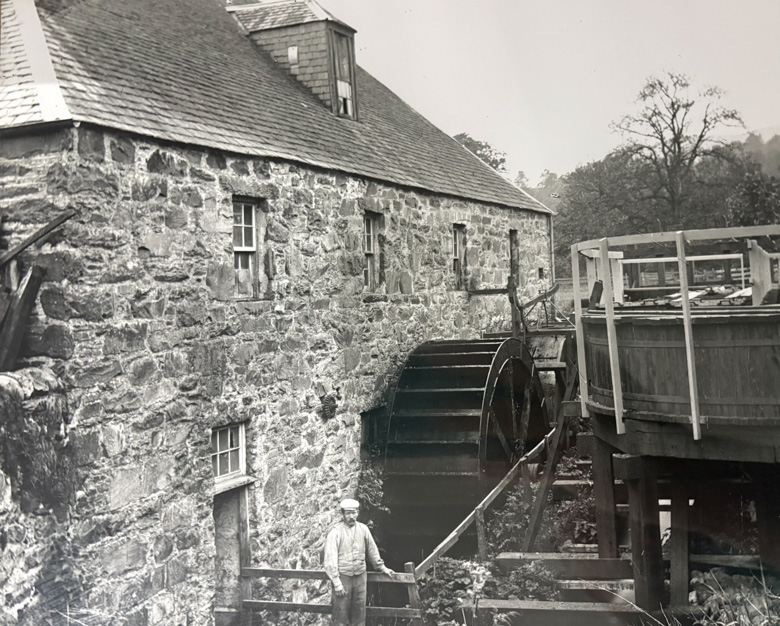
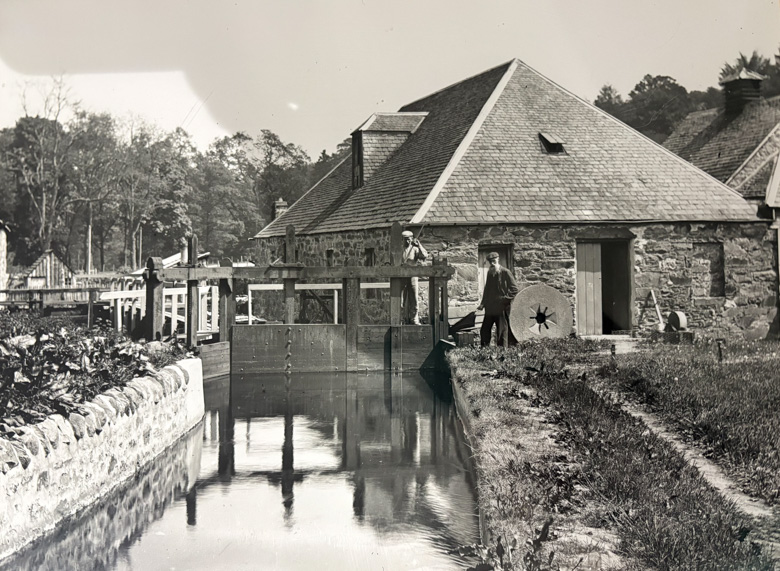
Historic photographs taken around 1903 preserve an image of the mill during its working life. The photo below shows Inver Corn / Meal Mill behind the lade, with the sluice gates visible in the foreground. The naturalist Charles McIntosh of Beatrix Potter fame is standing on the right. The Miller Mr Robertson is on the left.
From Corn / Meal Mill and Jacobite Rising to Family Farm
The history of Invermill stretches back long before the caravan park. About 400 years ago to the first records of 1623. People had already been working with the water of the Braan at Inver for more than three centuries before the first caravan ever arrived.
One of the most fascinating episodes in the mill’s history occurred during the Jacobite rising of 1745–46. For a brief moment, this little corn / meal mill beside the Braan became caught up in events that were affecting the whole of Scotland.
Meal was desperately important. Armies had to be fed, as did the prisoners being held at Logierait, and Inver Mill was expected to contribute supplies.
By February 1746, however, Charles McGlashan was struggling. He was ordered to send meal to Blair Castle, but protested that supplies at Inver were already desperately low. He had very little meal left and even the oats he possessed were intended for seed.
It is extraordinary to think of that now. The same quiet stretch of the River Braan that generations of holidaymakers would later come to enjoy was, in 1746, powering a mill being called upon to provide food during the Jacobite rising.
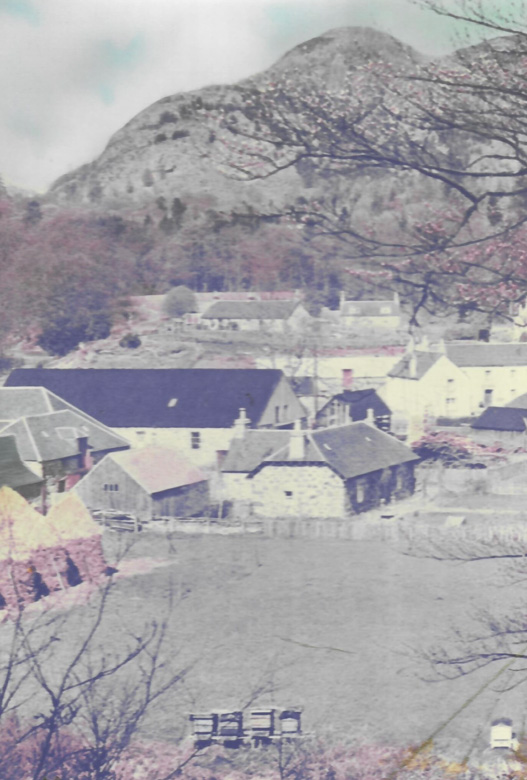
By the beginning of the nineteenth century, Inver was changing, but the corn / meal mill remained an important part of village life. For around a century, the Robertson family were tenant farmers and millers at Inver Mill Farm, from approximately 1809 until 1909. They farmed the surrounding land and operated a corn / meal mill powered by the River Braan.
Historic photographs taken around 1903 preserve an image of the mill during its working life. The photo below shows Inver Corn / Meal Mill behind the lade, with the sluice gates visible in the foreground. The naturalist Charles McIntosh of Beatrix Potter fame is standing on the right. The Miller Mr Robertson is on the left. The exact date on which milling ended is uncertain, although it had certainly ceased before the McIntyre family arrived in 1948.
The old mill wheel remained for a time but had disappeared by the 1960s. The mill building later became derelict and was demolished during the 2000s. Although neither the mill nor its wheel survives today, their history remains an important part of Invermill’s identity. The exact date on which milling ended is uncertain, although it had certainly ceased before the McIntyre family arrived in 1948.
Mary and Jimmy McIntyre
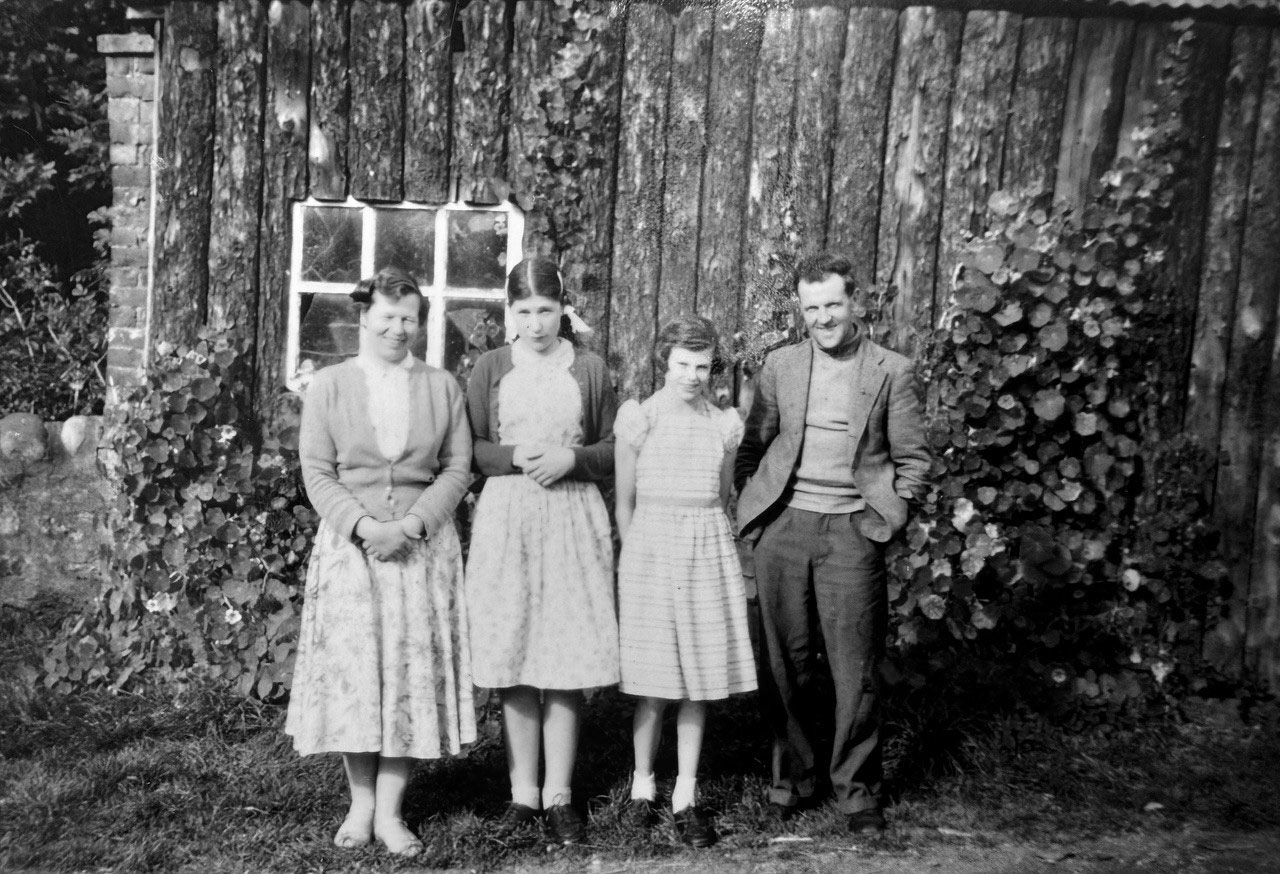
In November 1948, Mary and Jimmy McIntyre arrived at Invermill as tenant farmers.
The farm covered around 40 acres and supported a traditional mixed farming operation with cattle, sheep, pigs, poultry and crops.
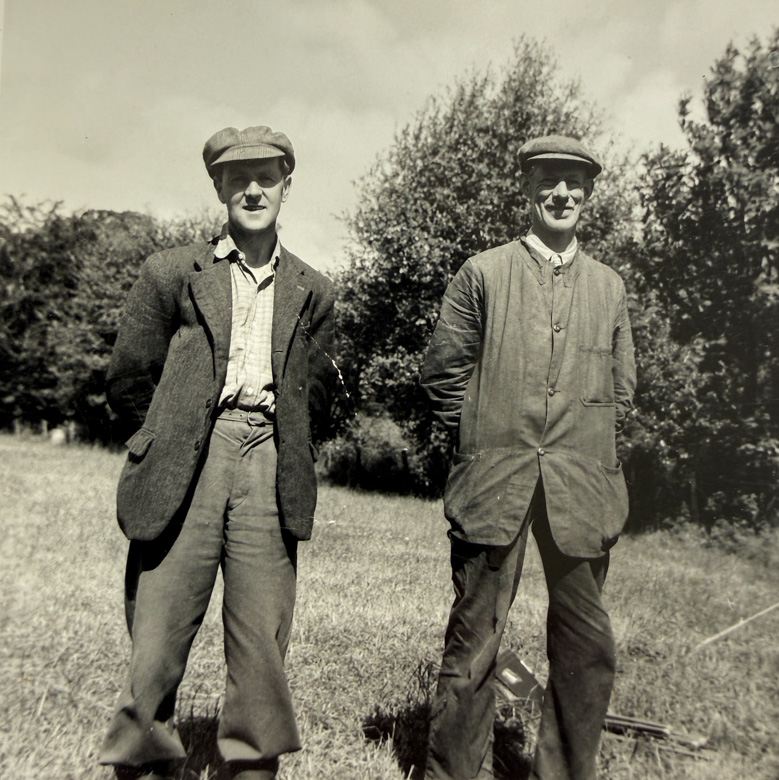
In those early years, Mary and Jimmy had no tractor and no family car. Much of the farm work was carried out by hand or with the help of Charlie, the farm’s workhorse. Their farm worker, George McFarlane, worked alongside them.
In 1952, Atholl Estates decided to sell Invermill. As the sitting tenants, Mary and Jimmy were given first refusal and bought the farm.
The following year, Jimmy purchased his first tractor. Even then, the move from horse-drawn farming was gradual because the existing farm implements had been designed for horses rather than tractors. Charlie therefore continued working at Invermill for several years and was fondly remembered by many of the park’s earliest guests.
The First Campers
The idea for the caravan park grew naturally. Families would arrive at the farm and ask Mary and Jimmy whether they could pitch a tent beside the River Braan. They were always made welcome, and before long many of the same families were returning every summer.
A number came from Dundee during the traditional Fair Fortnight.
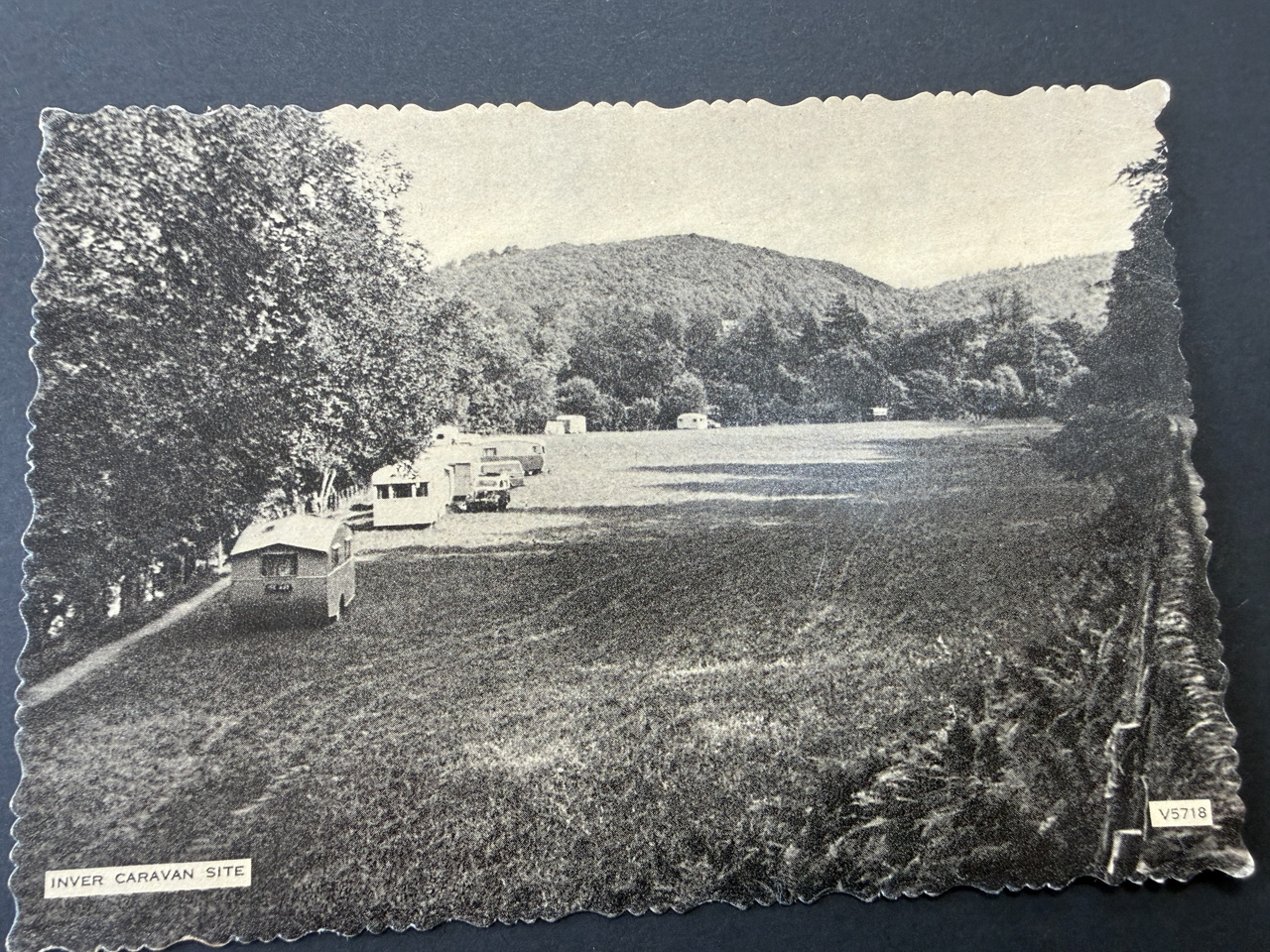
Few families owned cars in those days. Camping equipment was sometimes transported by coal lorry, while the campers themselves travelled by bus, train or bicycle. One family regularly made the journey on a tandem, while another arrived by motorbike and sidecar.
These early guests became friends, and their annual visits helped Mary and Jimmy recognise that Invermill had the potential to offer something more than farming alone.
A Caravan Park is Born
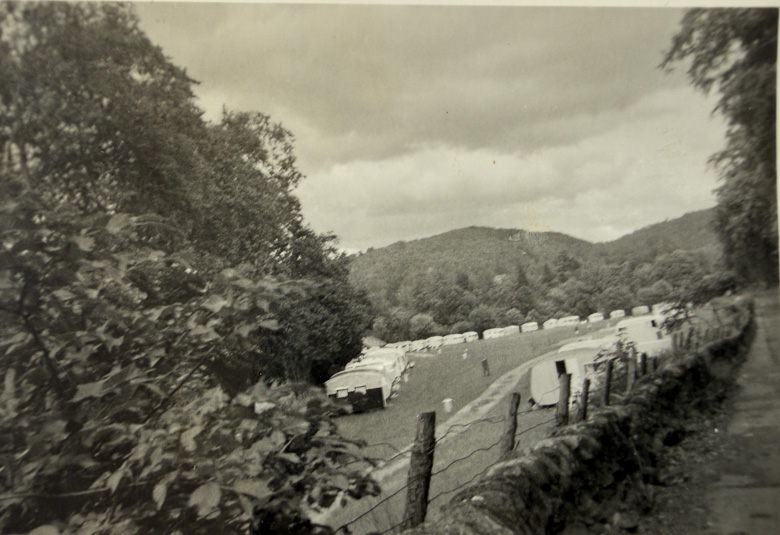
In 1956, Mary and Jimmy officially opened Invermill Farm Caravan Park. The area now occupied by the static holiday caravans was originally used by touring caravans and campers. As caravan ownership became more common, many guests asked if they could leave their caravans at Invermill and return throughout the season.
Gradually, the original touring field evolved into the static caravan park.
Later, the park expanded into the front paddock, creating the touring and camping area enjoyed by guests today.
Growing with the Generations
Invermill continued to develop gradually over the years.
Facilities improved, the park expanded and each generation reinvested in the business. However, Invermill never lost the friendly and personal atmosphere that had defined it from the beginning.
For many years, it remained both a working farm and a holiday park. Guests were not staying in a purpose-built resort but on a real family farm, surrounded by animals, fields, woodland and the River Braan.
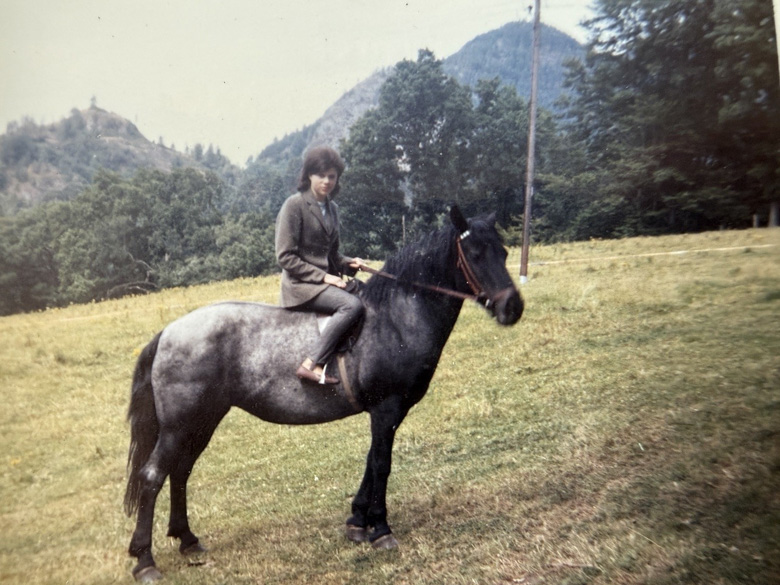
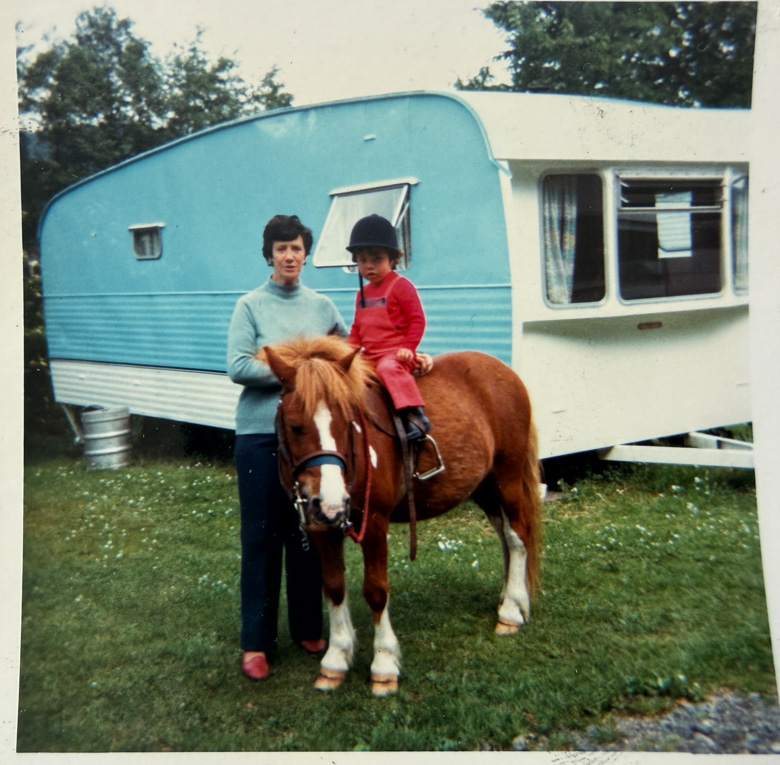
Alison McIntyre, Mary and Jimmy’s daughter, grew up at Invermill. As a teenager, she had a pony called Heidi and gave pony rides to children staying on the caravan park.
Many of those children returned years later with families of their own.
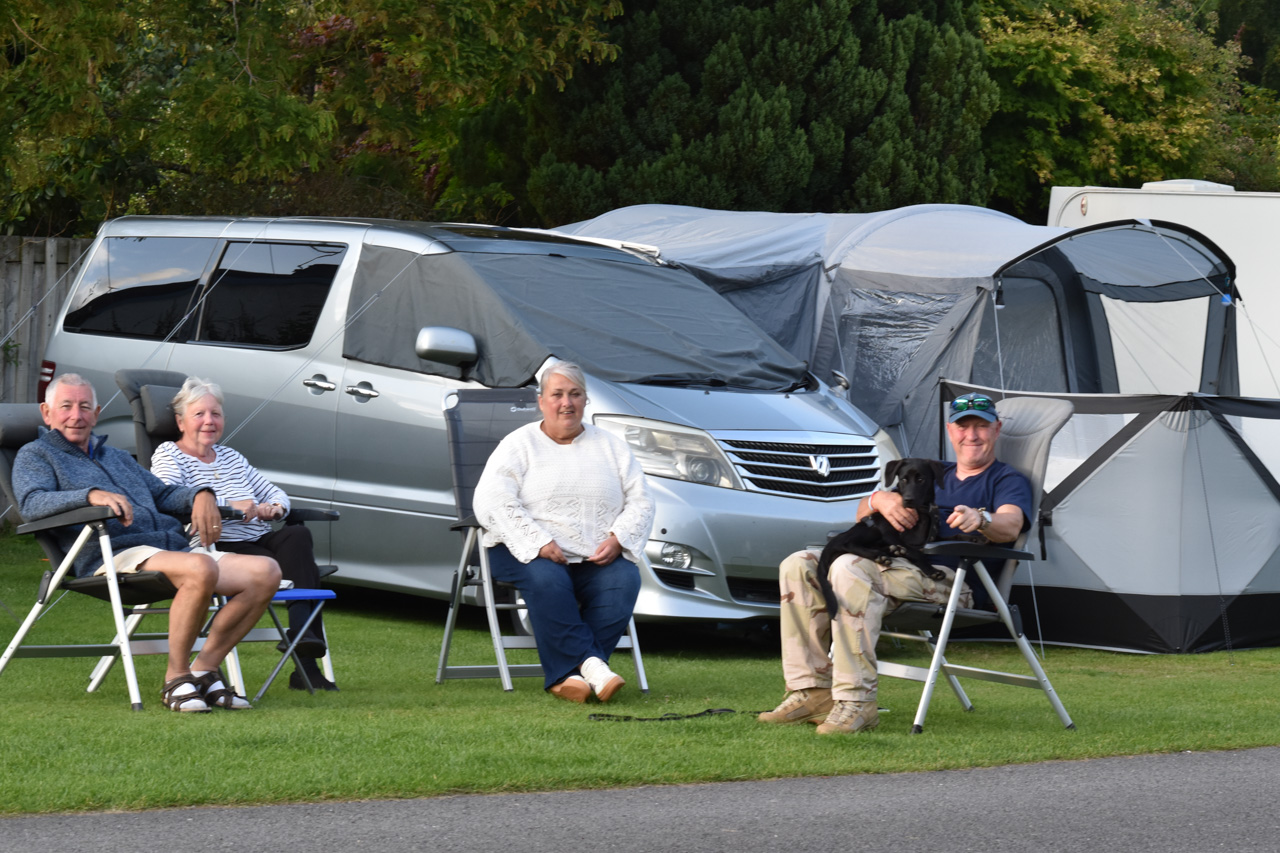
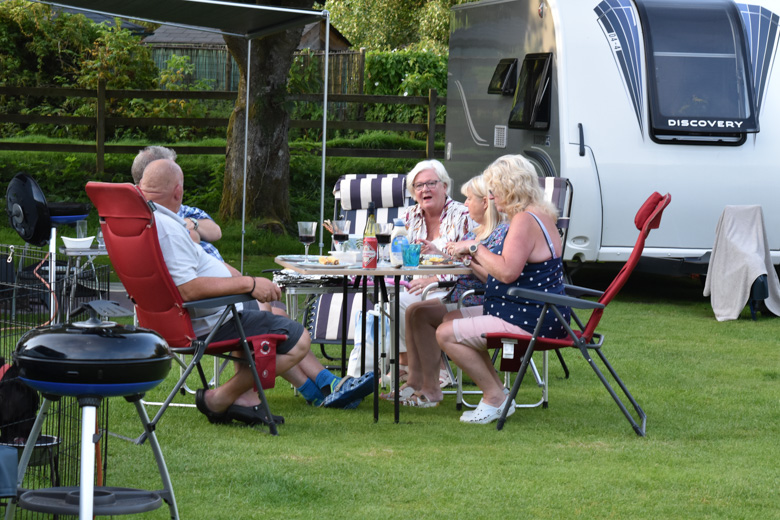
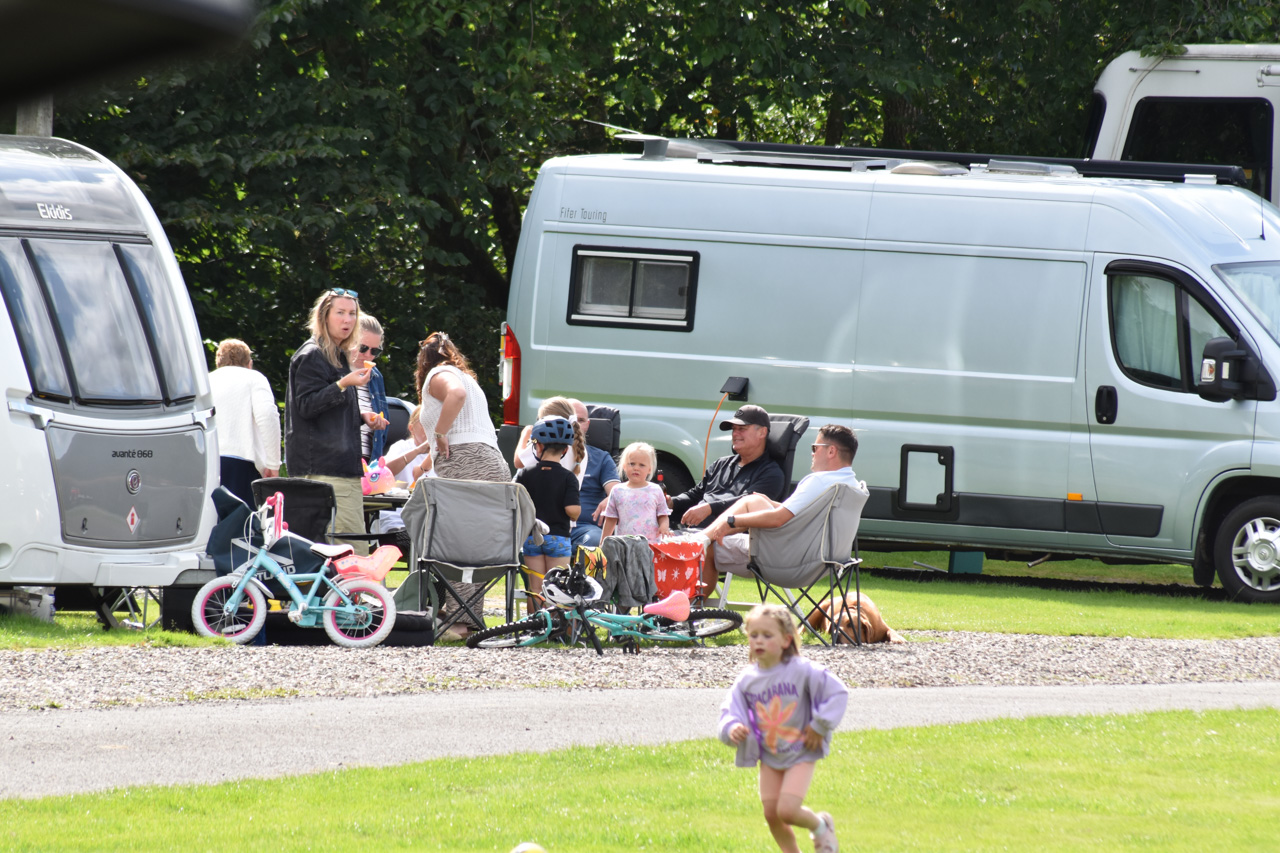
Today, we are proud to welcome second, third and even fourth generations of the same families. Some guests have been part of the Invermill story for almost as long as the caravan park itself.
Still Family Run
Invermill has always evolved by listening to its guests and adapting carefully to changing times.
It was never created through a grand business plan. It grew because people loved staying here, wanted to return and felt at home.
That remains at the heart of Invermill today.
We are proud of our history, proud to remain family run and grateful to every guest who has helped shape the park over the past seventy years.
Whether you are discovering Invermill for the first time or returning to a place filled with family memories, we look forward to welcoming you.